I thought I'd give an update on Global Learner stuff so far. It has been a busy semester. I'm finding it hard to fit in all that I want to do with my students.
We are currently working on a Fall Project with Tita Martinez' class in Center, CO. The idea behind the project is to compare some pictures and share some fall writing with another classroom. We set up a wiki to show our work. So far the students have taken a lot of pictures, charted some weather, done some leaf rubbings, and shared a book, The Leaf Man, with Mrs. Martinez' first grade classroom. We are working on some poems to include too. We look forward to finishing up the project when Center comes back from Fall break.
This is a lesson I did to help students get a better grasp on odd and even numbers. The students really enjoyed it and learned a lot. I think it could be used for Kinder or First grade too.
Objectives. Students will learn the concept of odd and even numbers by counting and sharing candies. Students will demonstrate the ability to identify odd and even numbers by selecting and categorizing odd and even numbers on a Smartboard, showing odd and even numbers of cubes, writing odd and even numbers, and filming or photographing odd and even things around the school.
We begin by telling about things that come in pairs, like shoes, feet, paws etc. We will tell that an even number is one that can be shared equally between two people. We will model handing out odd versus even numbers of Smarties candy to pairs of students to try to see if they can be shared equally.
Show odd and even movie from DiscoveryEducation: The Living Numbers: Odd and Even up to Twenty (segment of The Number Crew: Drinks for All). Then students act out forming even number by lining up with matching lines and adding one or taking one away to change it to and odd number.
Practice identifying odds and even numbers to 20 with cubes. Then show students how to identify larger odd and even number by looking at the last digit. Students drag objects from Smartboard images that are odd and even to their respective sides. Practice the odd and even chants. Then students form groups. Two groups will go around the school with video camera to get students to act out odd or even numbers. Two groups will go with digital camera to photograph evidence of various odd and even objects. One group work with teacher to search Creative Commons photos from flickr.com. Following day. Students work in center rotation to record audio descriptions of the odd and even photos. One group works to add titles and practice Windows Movie Maker.
Here is a lesson I created last week for my second graders in math: Grade Level Essential Target: 1.1c Use objects and pictures to represent whole numbers including odds and evens from 0 to 1000 1.2.c Group objects by ones, tens and hundreds according to place value (for example: given 9 ones, 5 tens and 4 hundreds the student can write the number 459; given the number 459, the student can show 4 hundreds, 5 tens and 9 ones) ISTE NETS Standard 2. Design and Develop Digital-Age Learning Experiences and Assessments (2a: design or adapt relevant learning experiences that incorporate digital tools and resources to promote student learning and creativity)
Student friendly objective: We will use objects to show numbers up to 1,000. We can use place value to help us group and count large numbers of objects. Language Objective: We will use language that helps us work as a team. We will use writing and speaking with math words and numbers to show our answers.
Open the lesson by reviewing counting by tens. Begin by telling students that when we get a lot of things to count we need a good way of counting. Bring a bag of M&Ms, a deck of cards and some other items that contain many objects. Ask the students to discuss with their elbow partner something that contains a lot of objects. Give students a sentence starter: One thing that contains a lot of items is…. Put students into groups of five and dump a bag full of straws (at least 50) on the table. Tell them they will need to use complete sentences to ask questions and to help them work as a team. (“I have x straws. How many do you have?”) Ask them to work together to count the straws. Observe how the students work together and praise any examples of teamwork. After a few minutes, bring the students back together and tell them that if you have numerous objects it is easiest to count them in groups rather than one by one. Now break out some rubber bands and start to group the straws into bundles of ten. Ask students to use polite language such as “Could you please pass me a rubber band? I need five more straws. Could we share to make a bundle?” Show the students that we will group exactly ten straws for each bundle, and then we can count by tens. Leftover straws do not get bundled. Let the students return to their groups and circulate to check with students as they proceed.
After the students have counted write the numbers for each group while counting the bundles. Review the concepts of tens and ones with students. Tell the students that if we want to count all the straws from each table group together we might even want to put together 10 bundles to form groups of 100. Use the Smart board to show place value boxes. Practice writing a variety of two and three digit numbers and call on students to identify the number of ones, tens, and hundreds. Have students use precise math terms such as, “There are x hundreds, x tens and x ones.” Then use the blank base ten chart in the place value folder of smart board under “Mathematics”, then “Number Concepts and Operations” or search by keyword. Type in labels for the chart then from the Place Value folder use the ones, tens, and hundreds blocks to represent various numbers and have the students write the numeric value for the blocks chosen on white boards. In the video I show how to set this lesson up.
Differentiation: The lesson offers tactile and visual forms of learning. Because of the ease of manipulating the smart board manipulatives the number of place values being taught and assessed can be increased or decreased to work within a variety of zones of proximal development.
An additional lesson based on counting candy can be found here.
One of my goals this year is to communicate more frequently on this blog. I am going to try to update this on a weekly basis even if I don't have anything exceptionally noteworthy. I think that I've been getting away from the original intent which is to reflect on my journey of growth as a teacher integrating technology.
The Global Learner veterans at Adams 14 school district finished giving a two and a half day training for the new Global Learner mentees. I will be working with two fantastic teachers from other schools. I understand the feeling of frustration and being overwhelmed with all the new technology. Two years ago, I went through the same thing. If I had had a mentor I think it would have reassured me. Sometimes you just need a nudge in the right direction every once and a while.
Bienvenidos al salon de clase de Mr. Fisher. Vamos a utilizar mucha tecnologia interesante. Mi meta es usar la pantalla SmartBoard y aprender y usar VoiceThread. Vamos a trabajar con dos clases -una de Hanson y la otra de Haskin Elementary en Center, Colorado. Mi numero de telefono es 303-853-5862. Welcome to Mr. Fisher's Classroom. We are going to be using some exciting technology this year. My goal is to use the SmartBoard and really work on VoiceThreads. I am excited to work with Mrs. Talamantes from Hanson and Ms. Martinez from Haskin Elementary. My classroom phone number is 303-853-5862.
This post is just a practice for embedding a post during the training for the 2009-2010 Global Learners training. This was one of the more popular training segments and I think the appeal of Voicethread lies in it's simplicity. Many primary teachers were excited about using this with their younger learners who do not type or write well yet. More to come on VoiceThreads later.
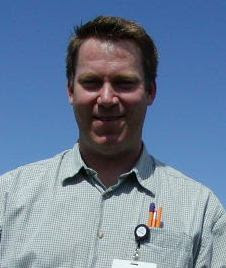
I'm a first grade ELA-S teacher in Commerce City, Colorado. I enjoy long walks in the datasphere, learning new things, and sharing them with colleagues.